
How to crochet the Sidesaddle cluster stitch (step-by-step-tutorial)
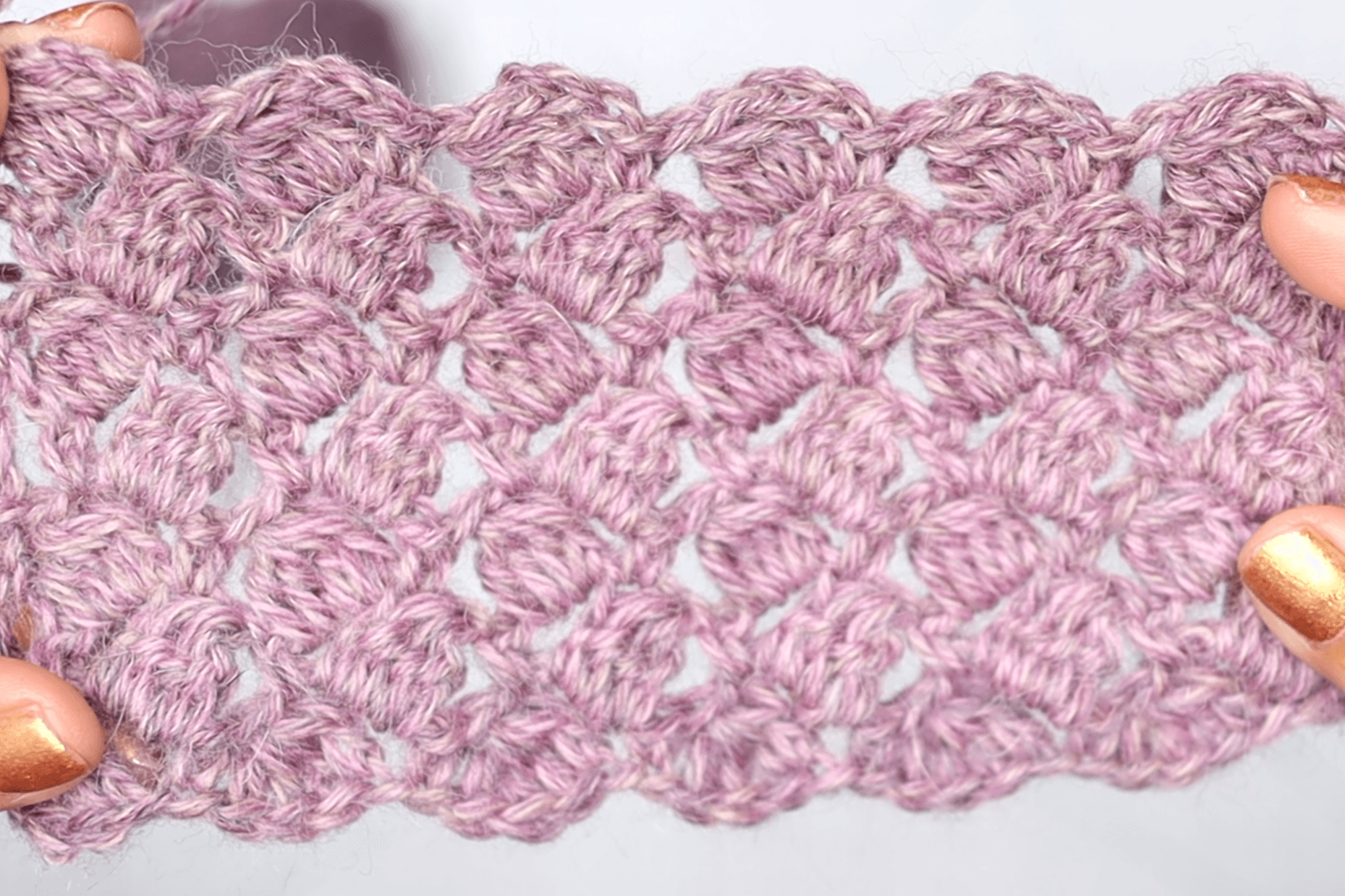
The Sidesaddle Cluster Stitch is a textured crochet pattern that creates gently leaning clusters across the fabric. The grouped stitches form a soft, dimensional surface that feels both structured and flowing. It’s a relaxing stitch to work and a lovely choice for scarves, blankets, and projects that benefit from subtle texture and visual movement.
This post may contain ads and affiliate links, which help support Crafting with Beth at no extra cost to you. I only recommend tools and materials I genuinely use or believe will be helpful for your crafting. For more information, please see our Privacy Policy, Cookie Policy, and Affiliate Disclosure. Thank you.
A graceful cluster that leans with character
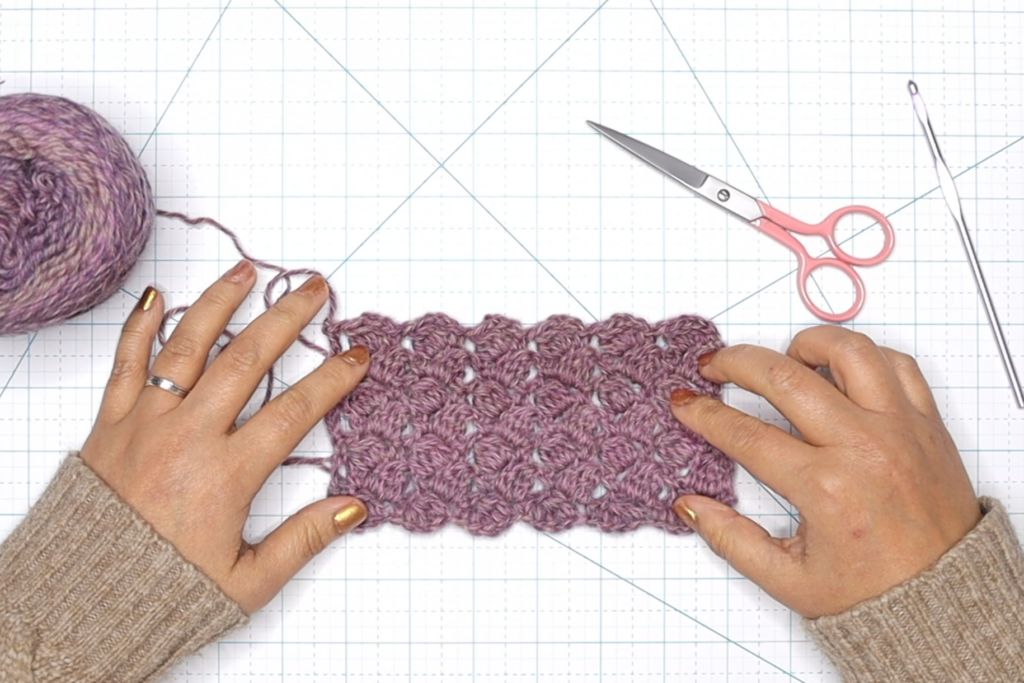
The Sidesaddle Cluster Stitch is a beautiful textured crochet stitch that brings both rhythm and movement to your fabric. Unlike traditional clusters that sit neatly upright, this stitch has a gentle lean — almost as if the stitches are resting together like riders sitting sidesaddle. The effect is subtle but captivating, creating a fabric that feels lively, dimensional, and full of personality.
At its heart, the stitch is formed by working grouped stitches together to create a soft cluster that draws the yarn inward. As the rows build, these clusters appear to tilt gracefully across the surface, giving the pattern a flowing texture that catches the eye without becoming overly complex. It is a wonderful stitch for crocheters who enjoy patterns that look intricate while still being relaxing to repeat.
Whether used in scarves, blankets, or decorative panels, the Sidesaddle Cluster Stitch adds warmth and depth to any project. Take your time with each cluster, allow the stitches to settle naturally, and soon the pattern will reveal its gentle rhythm row by row.
Step by step instructions
Materials you’ll need
To crochet the Half-Diamond stitch, you’ll only need a few basic materials. I’ve listed what I used below, along with suitable alternatives so you can adapt the stitch to your own project.
- Yarn: DK (light worsted) yarn
I recommend using a smooth, light-coloured yarn when learning this stitch, as it helps the ribbed texture stand out clearly. DK yarn works particularly well for practice swatches, scarves, and blankets. I recommend Stylecraft Special DK as it shows the ribbed texture clearly. - Crochet hook: 4.0 mm
I used a 4.0 mm hook for this tutorial. Ergonomic hooks like Tulip Etimo Murasaki crochet hook are especially helpful for textured stitches like this one, as they keep your tension even and reduce hand fatigue during longer sessions. - Scissors
For cutting yarn neatly at the end of your work. - Yarn needle
To weave in your ends once your swatch or project is complete.
Tip: If you tend to crochet tightly or loosely, don’t be afraid to adjust your hook size slightly to achieve a fabric you’re happy with.
To crochet the sidesaddle cluster stitch, you don’t need a specific brand of yarn. A smooth DK yarn works best, as it helps the texture and stitch definition stand out clearly.
Yarn options:
- UK gentle readers: A beginner-friendly DK yarn from Laughing Hen
- International readers: A wide colour selection of DK yarns from LoveCrafts
Crochet skills required
Crochet stitches standard: I am using the US / International standard crochet terms.
This stitch is suitable for confident beginners and above. Before starting, it helps to be comfortable with the following basic crochet skills:
- Making a slip knot (youtube video)
- How to crochet a foundation chains
- How to crochet the double crochet stitch
Let’s get started
Tension is very important. The yarn must glide smoothly from your tension hand to your working hand — not too tight, not too loose — and follow the gauge of your hook.
Featured stitch: 4 double crochet together (dc4tog)
Make a halfway double crochet into a specified space, (not pulling through the last 2 loops to finish off the stitch) 4 times, yarn over and pull through all 5 loops on the hook.
Foundation chains
The Sidesaddle cluster stitch is a multiple of 5 + 1 + 1 for the base chain. To create a sample tension, chain 30 + 1 + 1, that’s 32 chains in total.
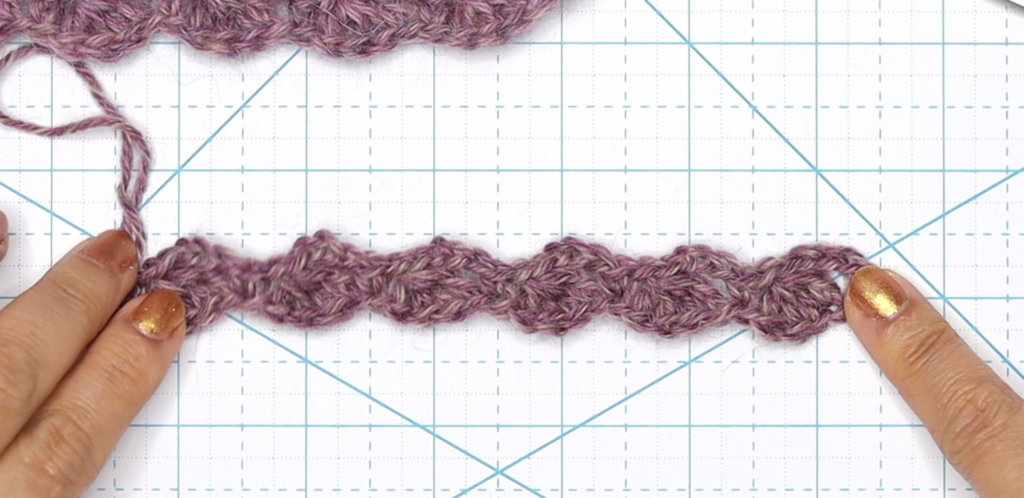
Row 1
To start the first row, make 1 single crochet into the second chain from the hook. *[chain 3, make 4 double crochet together over the next 4 chains, chain 1 to secure the cluster stitch, make 1 single crochet into the next chain. Repeat * until the end. Turn
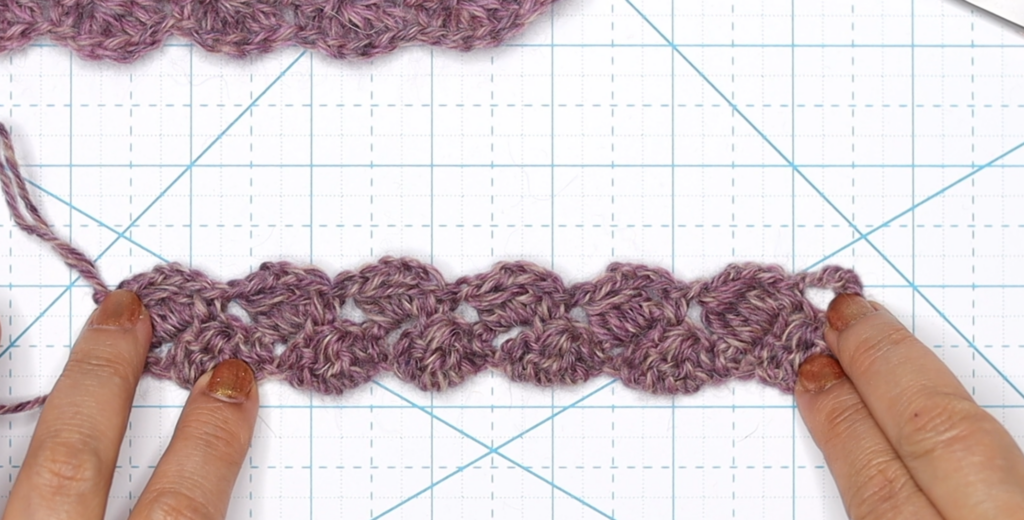
Row 2
To begin with the second row, chain 5, make 1 single crochet into the next cluster stitch, *[chain 3, make 4 double crochet together into the next chain 3 space, chain 1, make 1 single crochet into the next cluster stitch]. Repeat * and make 1 final cluster stitch into the last chain 3 space, and make 1 double crochet into the last stitch (single crochet at the beginning of the previous row).
Row 3
To begin with the third row, chain 1, skip the first stitch, make 1 single crochet into the next cluster stitch, *[chain 3, make 4 double crochet together into the next chain 3 space, chain 1, make 1 single crochet into the next cluster stitch]. Repeat * and make 1 final cluster stitch into the last chain 3 space, and make 1 single crochet into the third chain of the chain 5 space (5 chains at the beginning of the previous row).
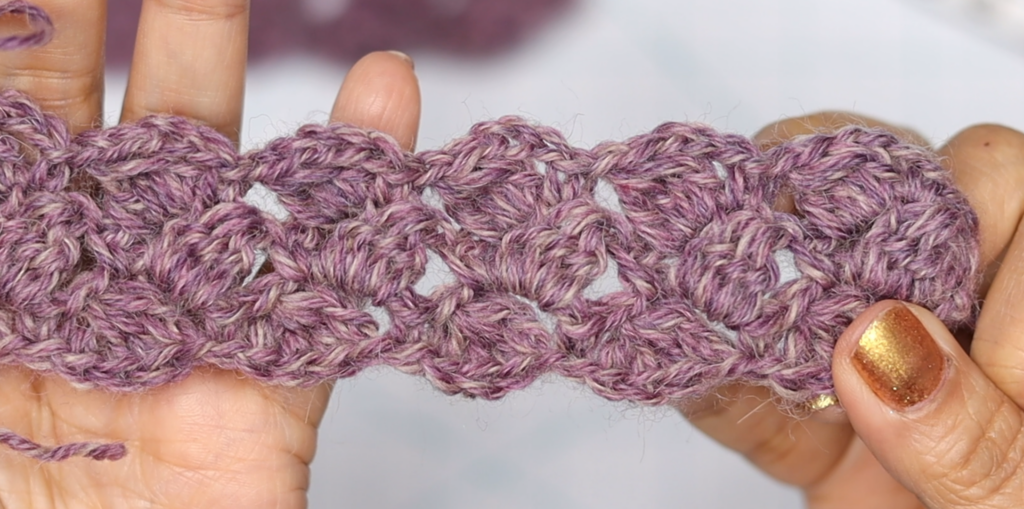
Repeat rows 2 and 3 for how many rows you’d like.
This is the Sidesaddle cluster stitch
© Crafting with Beth.
This pattern describes a common crochet technique. While crochet stitches and methods are not copyrightable, the written instructions, photographs, and explanations on this page are original and protected by copyright.
Made with care and shared with love. You may sell finished items made from this pattern, but please do not copy, reproduce, or redistribute the written instructions. Please credit Crafting with Beth when sharing your work.
