
How to crochet the Celadon stitch (easy step-by-step tutorial)
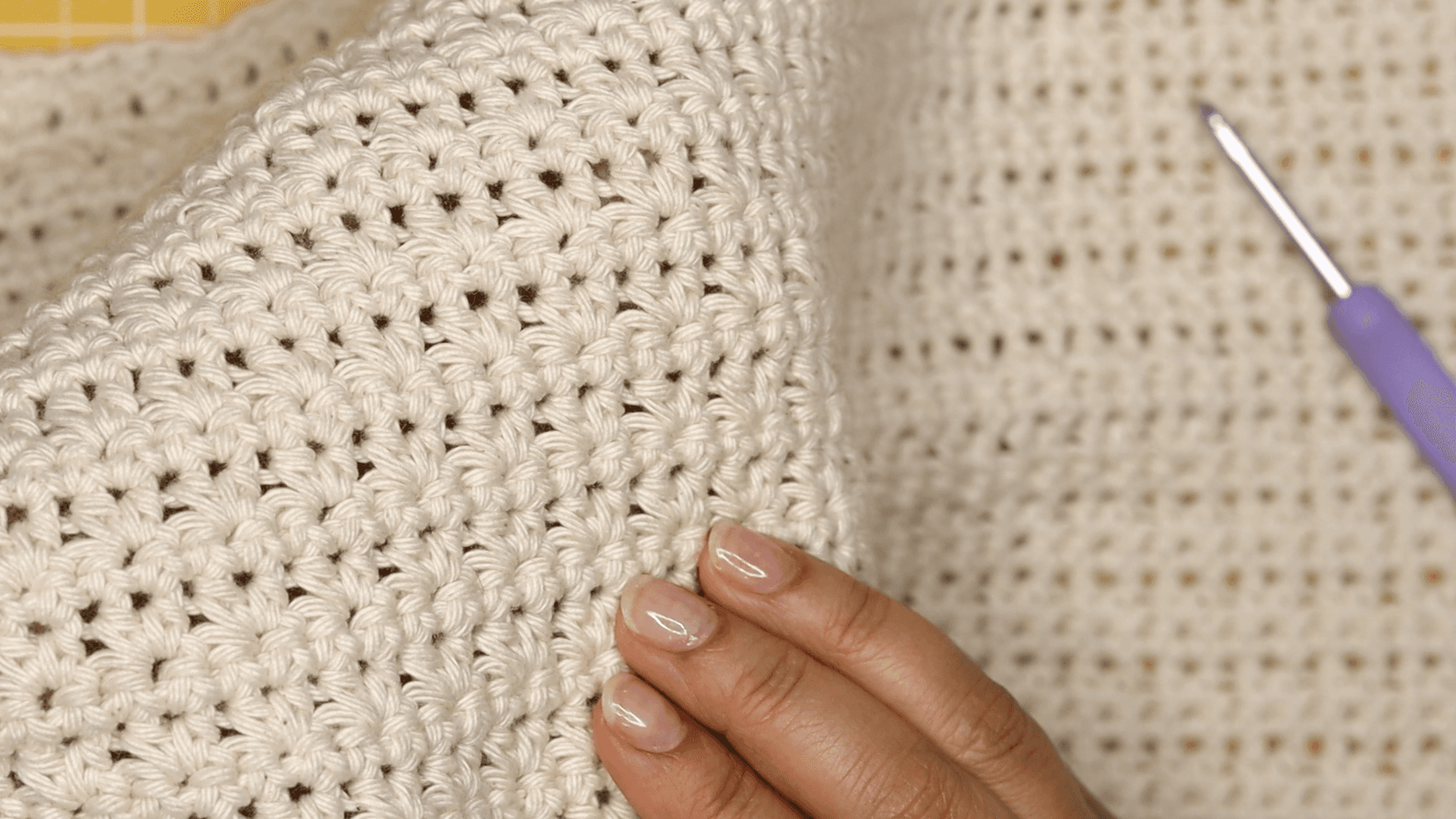
The Celadon Stitch is an elegant 2-row repeat crochet pattern named in inspiration for an upcoming tea set design. With its graceful texture and easy repeat, it is perfect for blankets, wraps, and decorative crochet projects.
This post may contain ads and affiliate links, which help support Crafting with Beth at no extra cost to you. I only recommend tools and materials I genuinely use or believe will be helpful for your crafting. For more information, please see our Privacy Policy, Cookie Policy, and Affiliate Disclosure. Thank you.
The Celadon Stitch is a calm and elegant crochet pattern built on a simple 2-row repeat. It creates a beautifully textured fabric that works wonderfully for blankets, scarves, wraps, and decorative home pieces.
I have chosen the name Celadon Stitch as inspiration for an upcoming tea set pattern, drawing from the timeless beauty and refined character often associated with celadon pottery. The stitch itself has a balanced, graceful texture that feels perfectly suited to projects designed for moments of warmth and comfort.
If you enjoy crochet stitches that are easy to remember yet still look polished and decorative, this is a wonderful choice. In this tutorial, you will learn the stitch step by step, making it approachable for confident beginners and enjoyable for more experienced crocheters alike.
Step by step instructions
Materials you’ll need
- Yarn: DK (light worsted) cotton yarn
I recommend using a smooth, light-coloured cotton yarn when learning this stitch, as it allows the ribbed texture and stitch definition to stand out clearly. A DK weight yarn works particularly well for practice swatches, scarves, blankets, and decorative home projects. Why not try the Paintbox Yarns Cotton DK - Crochet hook: 4.0 mm
I used a 4.0 mm hook for this tutorial. Ergonomic hooks like Tulip Etimo Murasaki crochet hook are especially helpful for textured stitches like this one, as they keep your tension even and reduce hand fatigue during longer sessions. - Scissors
For cutting yarn neatly at the end of your work. - Yarn needle
To weave in your ends once your swatch or project is complete.
Tip: If you tend to crochet tightly or loosely, don’t be afraid to adjust your hook size slightly to achieve a fabric you’re happy with.
To crochet the Celadon stitch, you don’t need a specific brand of yarn. A smooth DK yarn works best, as it helps the texture and stitch definition stand out clearly.
Yarn options:
- UK gentle readers: A beginner-friendly DK yarn from Laughing Hen
- International readers: A wide colour selection of DK yarns from LoveCrafts
Crochet skills required
Crochet stitches standard: I am using the US / International standard crochet terms.
This stitch is suitable for confident beginners and above. Before starting, it helps to be comfortable with the following basic crochet skills:
- How to make a slipknot (youtube video)
- How to crochet a foundation chains
- How to crochet the single crochet stitch
- How to crochet the half-double crochet stitch
Let’s get started
Tension is very important. The yarn must glide smoothly from your tension hand to your working hand — not too tight, not too loose — and follow the gauge of your hook.
Featured stitch:
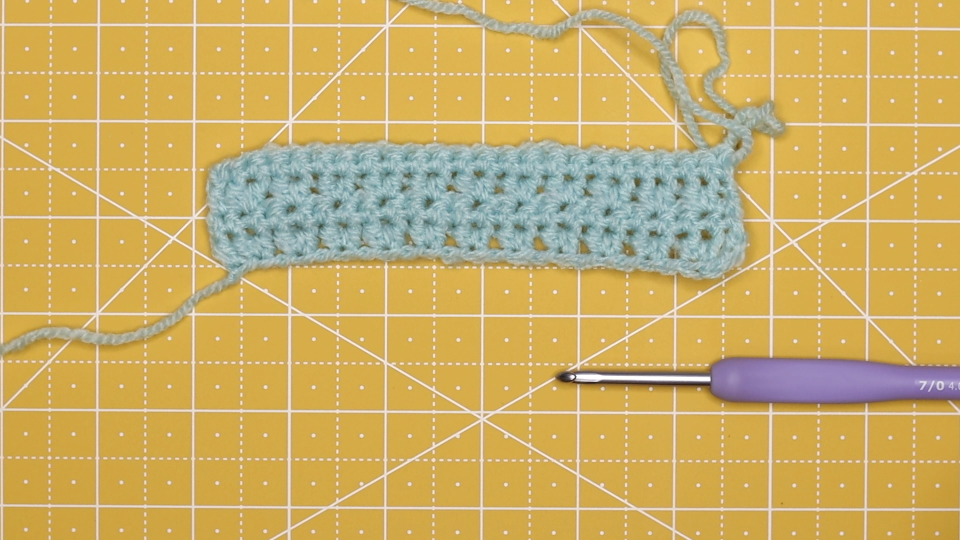
Celadon stitch: the stitch is as simple as 2 half-double crochet cluster stitches and a skipped stitch, followed by a row of single crochet while keeping the stitch count
Foundation chains
The celadon stitch is a multiple of 2 + 1 + 3 for the base chains. To create a sample tension, in this demo, I will be chaining 22 + 1 + 3, that’s 26 chains total, so we can see the pattern more clearly.
Row 1
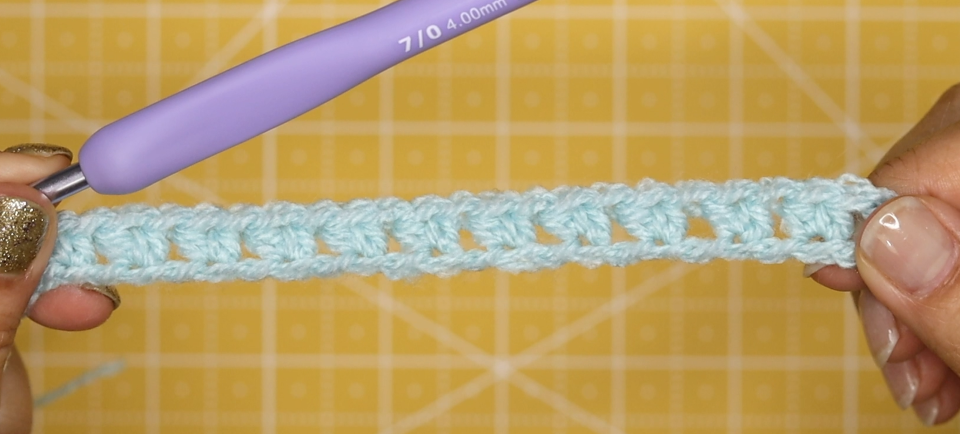
To start the first row, make 2 half-double crochet on the 4th chain from the hook, the chain 3 space will not be counted as a stitch. * [skip the next chain, make 2 half-double crochet into the next chain]. Repeat * until there’s 1 chain left. Simple make 1 half-double crochet into the last chain. You should have 23 stitches total for this row.
Row 2
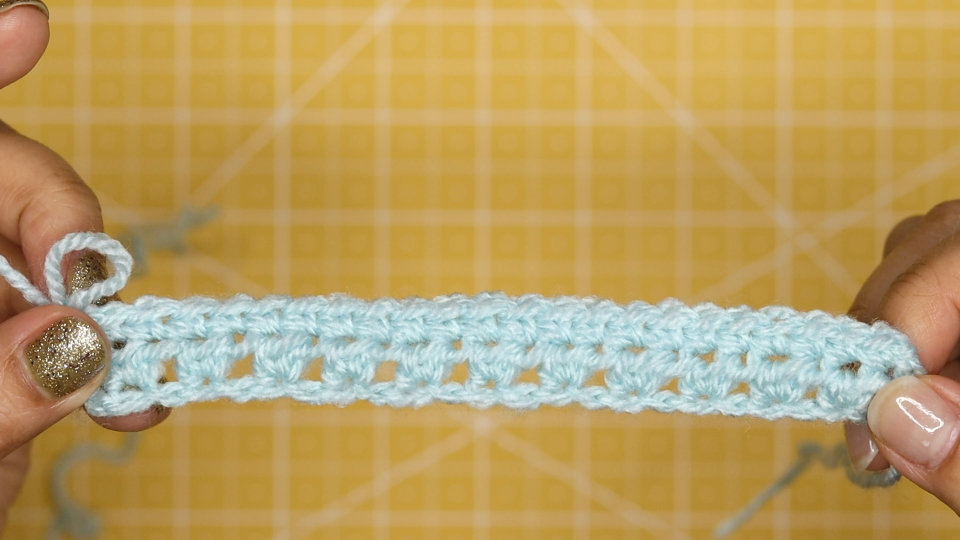
To begin with the second row, chain 1 (not counted as a stitch), and then turn. make 1 single crochet into the first stitch. * [make 1 single crochet into the next stitch. Repeat * until the end. You should still have 23 stitches total for this row.
Row 3
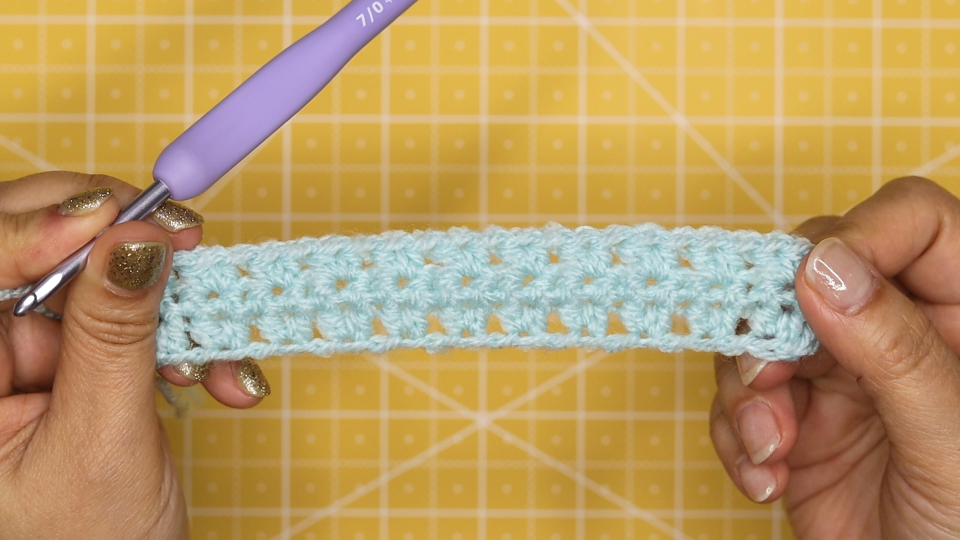
To start the third row, chain 2, skip the first stitch, and make 2 half-double crochet into the next stitch. * [skip the next stitch, make 2 half-double crochet into the next stitch]. Repeat * until there’s 1 stitch left. Make 1 half-double crochet into the last stitch. You should have kept the 23 stitches stitch count.
Row 4
Repeat row 2 and 3 for how many rows as you’d like, keeping the same stitch count all throughout, for this instance, 23 stitches.
Using foundation single crochet
You can use foundation single crochet if you’d like, that will be multiple of 2 + 1, omitting the base chains, in which you will make 23 single crochet total.
Alternatively, if you choose the foundation single crochet which I recommend, because it keeps your fabric flat from the very start, and easier to measure a tension square. The foundation single crochet will be counted as your first row, same as above sample, you should have 23 foundation single crochet. From here, your repeat starts from row 3 first, then row 2 alternately.
© Crafting with Beth.
This pattern describes a common crochet technique. While crochet stitches and methods are not copyrightable, the written instructions, photographs, and explanations on this page are original and protected by copyright.
Made with care and shared with love. You may sell finished items made from this pattern, but please do not copy, reproduce, or redistribute the written instructions. Please credit Crafting with Beth when sharing your work.
