How to crochet the Cabbage stitch (step-by-step tutorial)
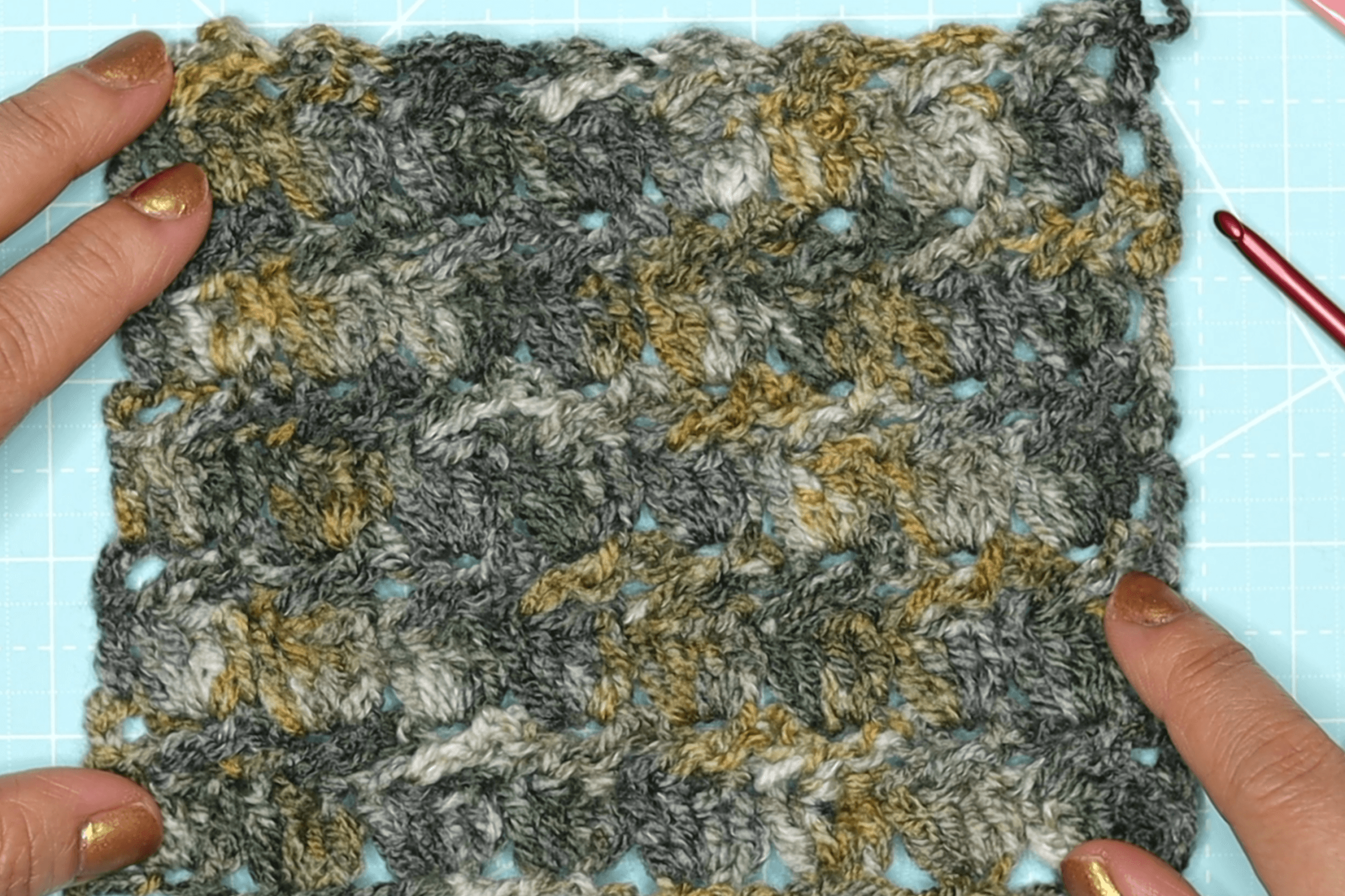
The Cabbage Stitch is a textured crochet pattern made from clustered stitches that form layered, rosette-like shapes across the fabric. Dense, dimensional, and wonderfully tactile, it creates a warm, sculpted finish perfect for cosy statement pieces.
This post may contain ads and affiliate links, which help support Crafting with Beth at no extra cost to you. I only recommend tools and materials I genuinely use or believe will be helpful for your crafting. For more information, please see our Privacy Policy, Cookie Policy, and Affiliate Disclosure. Thank you.
The richly layered charm of the Cabbage Stitch
The “Cabbage Stitch” is not a formally standardised stitch in the way that single crochet or half double crochet is. In contemporary crochet usage, it typically refers to a cluster-based texture pattern that produces layered, rounded formations resembling small cabbages or rosettes.
Across patterns and tutorials, it is commonly described as:
- A cluster stitch pattern worked with multiple double crochets (or trebles in UK terms) grouped in the same stitch or space
- A dense, highly textured fabric with raised, rounded motifs
- A stitch that creates a 3D floral or rosette effect
- A pattern best suited for blankets, cushions, and cosy accessories due to its thickness
The defining characteristic is the formation of compact, stacked clusters that sit prominently on the surface, creating strong shadow lines and dimensional depth.
The Cabbage Stitch is a beautifully dimensional crochet pattern built from grouped cluster stitches that form rounded, layered shapes across the fabric. Often described as resembling small rosettes or tightly gathered petals, each formation rises proudly from the surface, creating depth, shadow, and a sculpted texture that feels both decorative and substantial.
Unlike flat stitch patterns, this one celebrates structure. The clustered stitches stack neatly into one another, producing a dense, cushioned fabric with minimal stretch — perfect for blankets, statement cushions, and cosy accessories. Once you find the rhythm of forming and anchoring each cluster, the process becomes deeply satisfying, watching each “cabbage” bloom row by row into a fabric full of character and warmth.
Step by step instructions
Materials you’ll need
- Yarn: DK (light worsted) yarn
I recommend using a smooth, light-coloured yarn when learning this stitch, as it helps the ribbed texture stand out clearly. DK yarn works particularly well for practice swatches, scarves, and blankets. I used Stylecraft Special DK for this tutorial as it shows the ribbed texture clearly. - Crochet hook: 4.0 mm
I used a 4.0 mm hook for this tutorial. Ergonomic hooks like Tulip Etimo Murasaki crochet hook are especially helpful for textured stitches like this one, as they keep your tension even and reduce hand fatigue during longer sessions. - Scissors
For cutting yarn neatly at the end of your work. - Yarn needle
To weave in your ends once your swatch or project is complete.
Tip: If you tend to crochet tightly or loosely, don’t be afraid to adjust your hook size slightly to achieve a fabric you’re happy with.
To crochet the overlapping shell stitch, you don’t need a specific brand of yarn. A smooth DK yarn works best, as it helps the texture and stitch definition stand out clearly.
Yarn options:
- UK gentle readers: A beginner-friendly DK yarn from Laughing Hen
- International readers: A wide colour selection of DK yarns from LoveCrafts
Crochet skills required
Crochet stitches standard: I am using the US / International standard crochet terms.
This stitch is suitable for confident beginners and above. Before starting, it helps to be comfortable with the following basic crochet skills:
- How to make a slipknot (youtube video)
- How to crochet a foundation chains
- How to crochet the double crochet stitch
Let’s get started
Tension is very important. The yarn must glide smoothly from your tension hand to your working hand — not too tight, not too loose — and follow the gauge of your hook.
Featured stitch:
Crossed double crochet: Skip 3 the next 3 stitches, make a double crochet into the next stitch, chain 2, Working behind the last double crochet made, make a double crochet into the first stitch skipped
Foundation chains
The overlapping shell stitch is a multiple of 4 + 7 . To create a sample tension, in this demo, I will be chaining 28 + 7, that’s 35 chains in total, so we can see the pattern more clearly.
Row 1: (Right side)
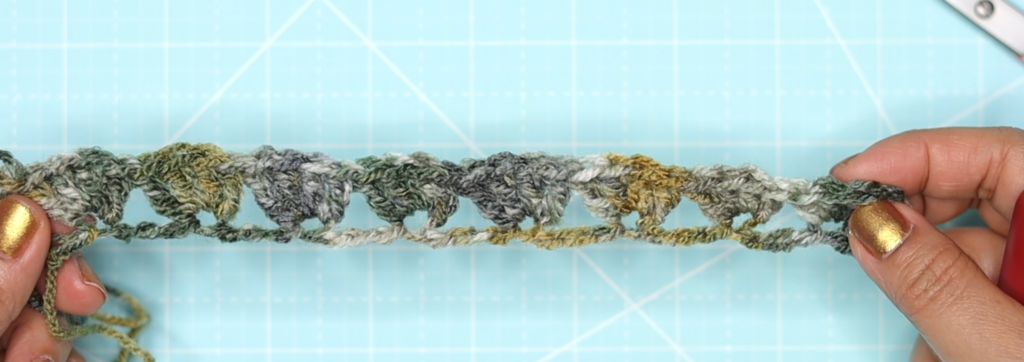
To start the first row, make 4 double crochet on the 5th chain from the hook. * [skip the next 3 chains, make 4 double crochet into the next chain]. Repeat * until there are 2 chains left. Skip the next chain, make 1 double crochet into the last chain.
Row 2
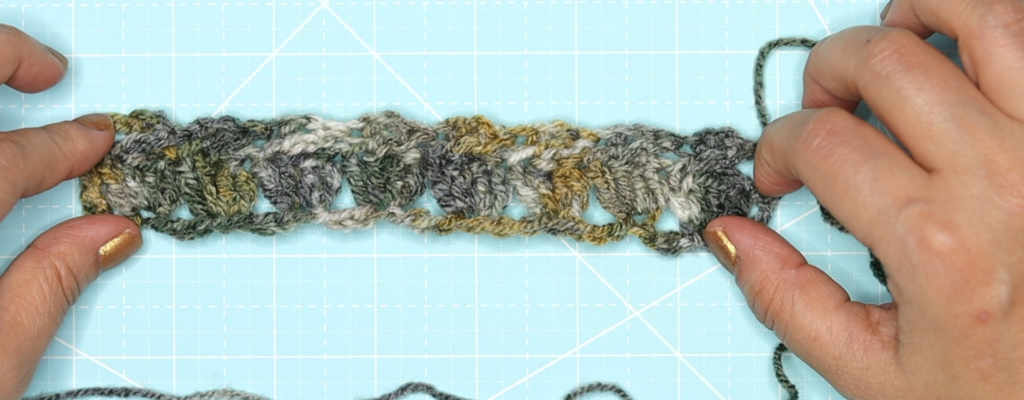
To begin with the second row, chain 3 (counted as a stitch), and then turn. * [work a Crossed double crochet 4 stitches]. Repeat * until the last full Crossed double crochet stitch. Work 1 double crochet on top of the chain 3 at the beginning of the previous row.
Row 3
To start the third row, chain 3, work 4 double crochet in each of the chain 2 space all the way across. Work 1 double crochet on top of the chain 3 at the beginning of the previous row.
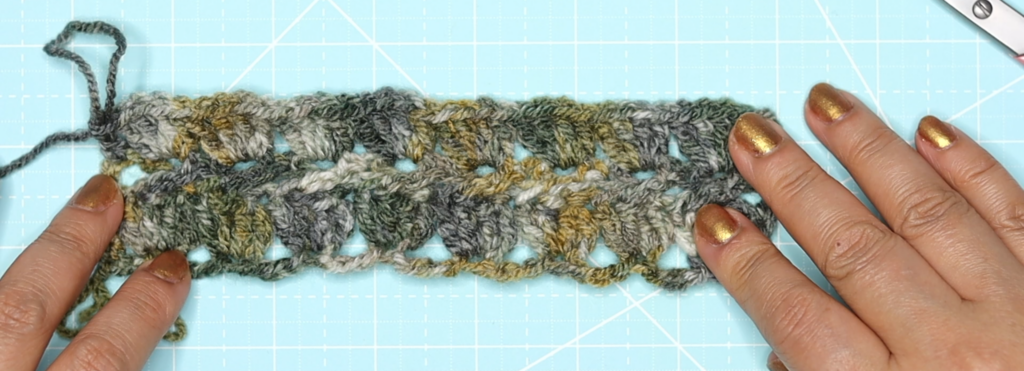
Row 4 and beyond
From here, you can repeat rows 2 to 3 for how many times as you’d like. I hope you fell in love making this stitch.
© Crafting with Beth.
This pattern describes a common crochet technique. While crochet stitches and methods are not copyrightable, the written instructions, photographs, and explanations on this page are original and protected by copyright.
Made with care and shared with love. You may sell finished items made from this pattern, but please do not copy, reproduce, or redistribute the written instructions. Please credit Crafting with Beth when sharing your work.